


Kazakhs Misidentified: How Historical Archives Confused Different Peoples
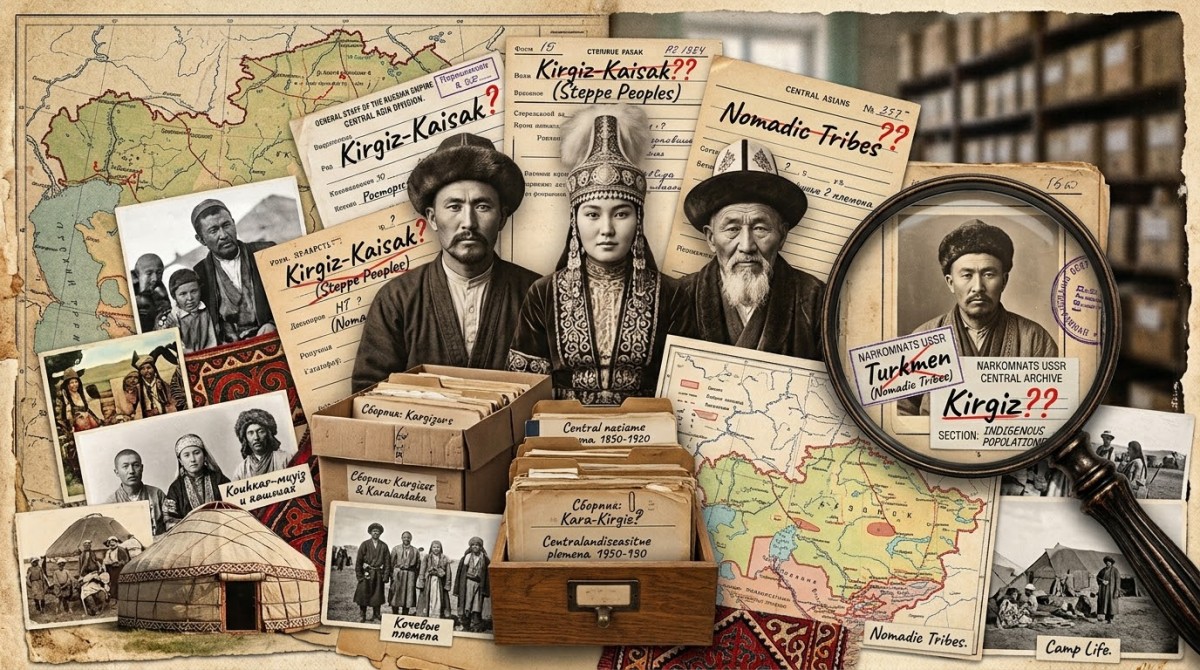
An old photograph can preserve a person’s appearance, their clothing, and the everyday life of an entire era. But how accurately does it tell us who is actually depicted? Sometimes, the question is not about the photograph itself, but the caption beneath it.
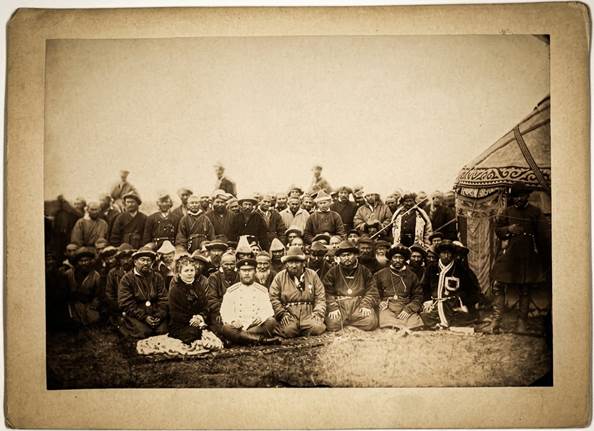
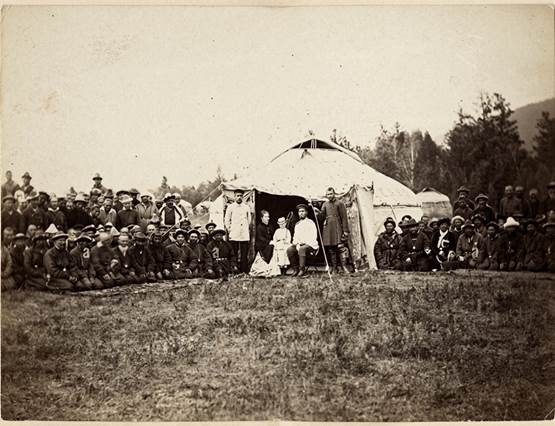
The U.S. Library of Congress holds the late-19th-century photographs from the collection of American traveller George Kennan. Some of these photos were originally accompanied by inaccurate descriptions. Their catalogue entries were later revised: photographs once identified as showing Kyrgyz or Tatar people, or associated with Siberia, are now identified as depicting Kazakhs and places in what is now Kazakhstan.
Photos with Corrected Captions
One of the images in the collection was described as showing a group of people in a “Tatar village” near Semipalatinsk. The revised archival description identifies the settlement as a Kazakh village. Other photos from the same collection were initially labelled as showing Kyrgyz people in Siberia. The archival records were later corrected: the photos depict Kazakhs and are associated with places in what is now Kazakhstan.
These examples show that an archival caption is not always the final word. Descriptions can change as historical documents, geographical information and details about a photograph’s origins are examined more closely.
The Turkestan Album: How Kazakhs Were Described in the Nineteenth Century
Another example of historical terminology can be found in the Turkestan Album, published in 1871–1872 on the orders of Konstantin Kaufman, Governor-General of Russian Turkestan. The ethnographic section was compiled by orientalist Alexander Kun.
The album contains photos of Central Asian inhabitants, their clothing, occupations and everyday lives. Some captions use the terms “Kyrgyz-Kazak” and “Cholak-Kazak”. These labels reflect the terminology of the period, when Kazakhs were often referred to in Russian-language sources as “Kyrgyz” or “Kyrgyz-Kaisaks”.
For example, one photograph is captioned “Types of the Peoples of the Turkestan Region. Kyrgyz-Kazaks: Utkul-Bai”. Another bears the title “Types of the Peoples of the Turkestan Region. Cholak-Kazaks. Sardzhan-Kazak”.
Today, these captions are of interest not only as descriptions of photographs. They also reveal how the population of the region was classified in the 19th century. However, the use of an outdated ethnonym does not, by itself, mean that the album’s compilers misidentified the people shown. Such a conclusion requires an examination of the specific photographs and the circumstances in which they were produced.
Why Were Kazakhs Called Kyrgyz in Old Documents?
The confusion is rooted in the history of ethnonyms. In documents of the Russian Empire from the eighteenth and nineteenth centuries, Kazakhs were frequently referred to as “Kyrgyz” or “Kyrgyz-Kaisaks”, while the Kyrgyz people could be designated as “Kara-Kyrgyz”. The use of these terms varied according to the period, region and context.
Another factor was the need to distinguish Kazakhs from Russian Cossacks, whose names were similar in Russian. Over time, the terms “Kyrgyz” and “Kyrgyz-Kaisak” became established in official records referring to Kazakhs.
For this reason, the word “Kyrgyz” in a historical document does not always mean that the text refers to the Kyrgyz people. To determine which people a document refers to, researchers must consider its date, location, content and other historical evidence.
The Return of the Name “Kazakh”
The question of the Kazakh people’s self-designation was raised by researchers and public figures at different times. In the nineteenth century, Alexei Levshin made a significant contribution to the study of Kazakh history and ethnography. He was later referred to as the “Herodotus of the Kazakhs”. His works provided detailed accounts of the history, population and social organisation of the Kazakh steppe.
The issue gained particular importance in the early twentieth century. On 15 February 1923, the newspaper Enbekshi Qazaq published an article by Saken Seifullin titled “Қазақты қазақ дейік, қатені түзетейік” (“Let Us Call Kazakhs Kazakhs and Correct the Mistake”). Seifullin opposed the use of the term “Kyrgyz” for Kazakhs and called for a return to the people’s historical self-designation.
In 1925, the Kirghiz ASSR was officially renamed the Kazak ASSR. The corresponding decree of the All-Russian Central Executive Committee was adopted on 15 June. This marked an important step in establishing the republic’s historical name in official documents.
Why Archival Captions Need Checking
The history of these old photos shows that archival descriptions have a history of their own. They may reflect the terminology of their time, the assumptions of catalogue compilers or the limitations of the information available to them. Later research can refine these records and restore the historical context of the images.
This work matters not only for the accurate identification of photographs from Kazakhstan. It also helps researchers develop a clearer understanding of the region’s population, geography and everyday life in earlier periods.
Sometimes, just a few words beneath an old photograph can change our understanding of who is pictured and where the image was taken.
Sources:
Library of Congress. (n.d.). Group of Kirghiz (i.e. Kazakh) men posing with a local Russian Governor, his wife, and their child in front of a yurt [Photograph].
Kennan, G. (Collector). (n.d.). Views of People and Places in and Near Siberia from the George Kennan Papers [Photographic collection]. Library of Congress.
Kaufman, K. P. von, & Kun, A. L. (Comps.). (1871–1872). Turkestanskii al'bom. Chast' etnograficheskaia [Turkestan Album: Ethnographic Section].
