


Kultegin and the Political Meaning of the Orkhon Inscriptions
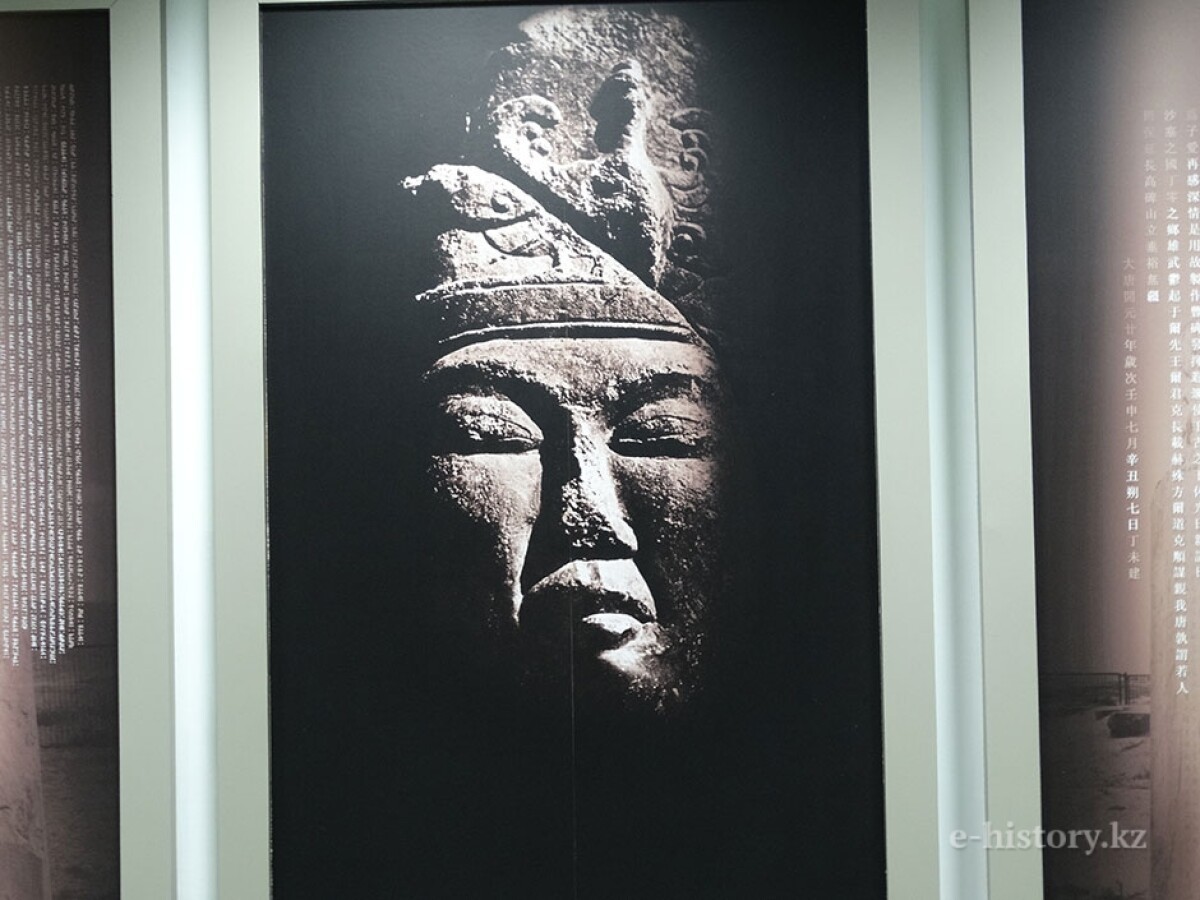
The Orkhon inscriptions are among the most important surviving records of the ancient Turkic world. Carved into stone, they preserve accounts of rulers, military campaigns, political struggles, and efforts to unite Turkic tribes under a common state. At the same time, they are more than historical chronicles. Their language and imagery express ideas about loyalty, independence, collective responsibility, and the survival of a people.
In the study “Kultegin is the Commander of Ancient Turks,” Saule Orazbay, Magripa Eskeeva, Raushangul Avakova, Sholpan Khudiarova, and Gaziza Shoybekova examine the inscription dedicated to Kultegin, one of the most prominent military figures of the ancient Turkic period. The authors consider its historical, linguistic, cultural, and literary significance, presenting the monument as both a record of the Turkic Khaganate and an early example of heroic epic.
A Written Record of the Ancient Turkic World
The Kultegin monument belongs to the broader tradition of the Orkhon-Yenisei and Talas inscriptions. These written monuments were discovered across a vast region that includes Mongolia, Southern Siberia, Central Asia, and parts of present-day Kazakhstan and Kyrgyzstan.
The inscriptions are commonly grouped according to where they were found. The Yenisei group includes texts discovered near the Yenisei River and in surrounding regions. The Talas inscriptions were found mainly in southern Kazakhstan and Kyrgyzstan. The Orkhon group includes major monuments associated with figures such as Kultegin, Bilge Khagan, Tonyukuk, and other leaders of the Turkic Khaganate.
These inscriptions served several purposes. They recorded political events, military campaigns, and the achievements of rulers and commanders. They were also used for commemorative texts and diplomatic communication. Because they preserve ancient Turkic vocabulary and grammatical forms, they remain important sources for studying the historical development of Turkic languages.
The study emphasizes that many words found in the inscriptions are still recognizable in modern Turkic languages. Terms connected with government, society, military organization, and political authority demonstrate that ancient Turkic already possessed a developed vocabulary for describing complex institutions. The linguistic evidence therefore supports the broader cultural importance of the inscriptions: they are presented as part of the shared heritage of Turkic-speaking peoples.
Kultegin as Warrior and Commander
Kultegin was the younger son of Kutlug, also known as Ilterish Khagan, and the brother of Bilge Khagan. According to the account discussed in the study, he took part in military and political life from an early age and continued fighting until his death at forty-seven.
The inscription dedicated to him describes conflicts with neighboring peoples, internal divisions among Turkic tribes, and campaigns intended to strengthen the khaganate. Kultegin appears not simply as an individual fighter but as a commander whose actions were connected to the preservation of the state.
The military passages are among the most vivid parts of the monument. They describe armies advancing, enemies being pursued, commanders being captured, and Kultegin personally entering battle on horseback. His horses are sometimes identified individually, reinforcing the close relationship between the warrior and his mount in Turkic military culture.
These descriptions contribute to the heroic character of the text. Kultegin is represented as courageous, disciplined, decisive, and willing to risk his life for his people. Yet the study does not treat his military achievements as isolated acts of personal bravery. His heroism is repeatedly connected with a larger political purpose: defending the land, preserving the khaganate, and uniting the Turkic people.
After Kultegin’s death, Bilge Khagan ordered the creation of a monument in his honor. The resulting inscription preserved the story of his campaigns and presented his life as an example for later generations. In this sense, the monument functioned both as a memorial to a commander and as a statement about the principles on which political order depended.
Unity, Independence, and Statehood
The central political idea of the Kultegin inscription is unity. The Turkic people are repeatedly called upon to remain loyal to their state and to avoid divisions that could make them vulnerable to outside powers.
The text presents statehood as something that must be actively created, defended, and maintained. Military victory alone is not enough. A people must also possess a shared purpose, respect legitimate authority, and resist internal conflict. The survival of the nation depends on its ability to remain politically organized.
The study interprets Kultegin as a figure who embodies this collective ideal. His courage is important because it serves the community. His loyalty is directed not only toward a ruler or dynasty but toward the continued existence of the Turkic state.
This interpretation gives the monument a moral as well as a historical dimension. The inscription praises qualities such as responsibility, endurance, self-respect, determination, and devotion to the people. Kultegin becomes a model of leadership because he combines personal bravery with commitment to a common political goal.
The monument also warns against dependence on stronger or wealthier neighboring states. Its political message encourages the Turkic people to protect their freedom, preserve their institutions, and refuse submission. Independence is therefore presented not as an abstract ideal but as the result of discipline, sacrifice, and unity.
An Early Heroic Epic
The authors also examine the literary qualities of the inscription. Although it records historical events, its language often resembles heroic narrative. Battles are presented dramatically, warriors are defined by their courage and loyalty, and Kultegin’s life is organized around a sequence of military achievements.
This combination of history and heroic storytelling allows the inscription to be understood as an early form of Turkic epic. It commemorates real political struggles while transforming them into a larger narrative about national survival.
The heroic image is reinforced by recurring cultural symbols. The horse occupies a particularly important place. In the inscription, the warrior and his horse form a single military unit. A commander’s strength, speed, and effectiveness depend on the animal that carries him into battle.
The study connects this image with the broader symbolic importance of horses in Turkic culture. Horses appear in ancient art, burial traditions, and mythological representations. In heroic literature, the horse is not merely a practical means of transport. It is a loyal companion and an essential part of the warrior’s identity.
Religious and mythological ideas also appear in the inscription. References to Tengri, the earth, and Umay reflect the spiritual world of the ancient Turks. Political authority is described within a cosmic order in which rulers, people, heaven, and land are connected. Statehood is therefore presented as both a human achievement and part of a wider moral universe.
Historical Memory and Cultural Significance
The Kultegin inscription provides information about military organization, political authority, language, belief, and relations among Turkic tribes. Its importance, however, lies not only in the facts it preserves. The monument also shows how the ancient Turks understood their own history.
They represented the past as a struggle to establish order, defend independence, and prevent the disappearance of the state. Leaders were judged by their ability to unite the people, defeat external enemies, and preserve political institutions. Heroism was measured through service to the community.
The study gives particular attention to the inscription’s educational significance. Kultegin is presented as an example intended to inspire courage, patriotism, and responsibility. His life teaches that freedom requires sacrifice and that political unity cannot be taken for granted.
Such interpretations sometimes place the monument within later national traditions, especially Kazakh historical and cultural memory. At the same time, the inscription is described as a shared inheritance of the wider Turkic world. Its language, political ideas, and heroic imagery connect it with the histories of numerous Turkic-speaking peoples.
The monument should therefore be understood on several levels. It is a historical document about the Turkic Khaganate, a linguistic source for the study of ancient Turkic, a memorial to a military commander, and a literary work shaped by the conventions of heroic epic.
The study’s central conclusion is that the Kultegin inscription preserves a political and moral vision built around unity, statehood, courage, and independence. By placing Kultegin’s military achievements within the larger history of the Turkic people, the monument turns an individual life into a lasting statement about collective survival. Its continuing significance comes from this combination of historical record, cultural memory, and political instruction.
