


“Arabic Language Week” Launches in Kazakhstan
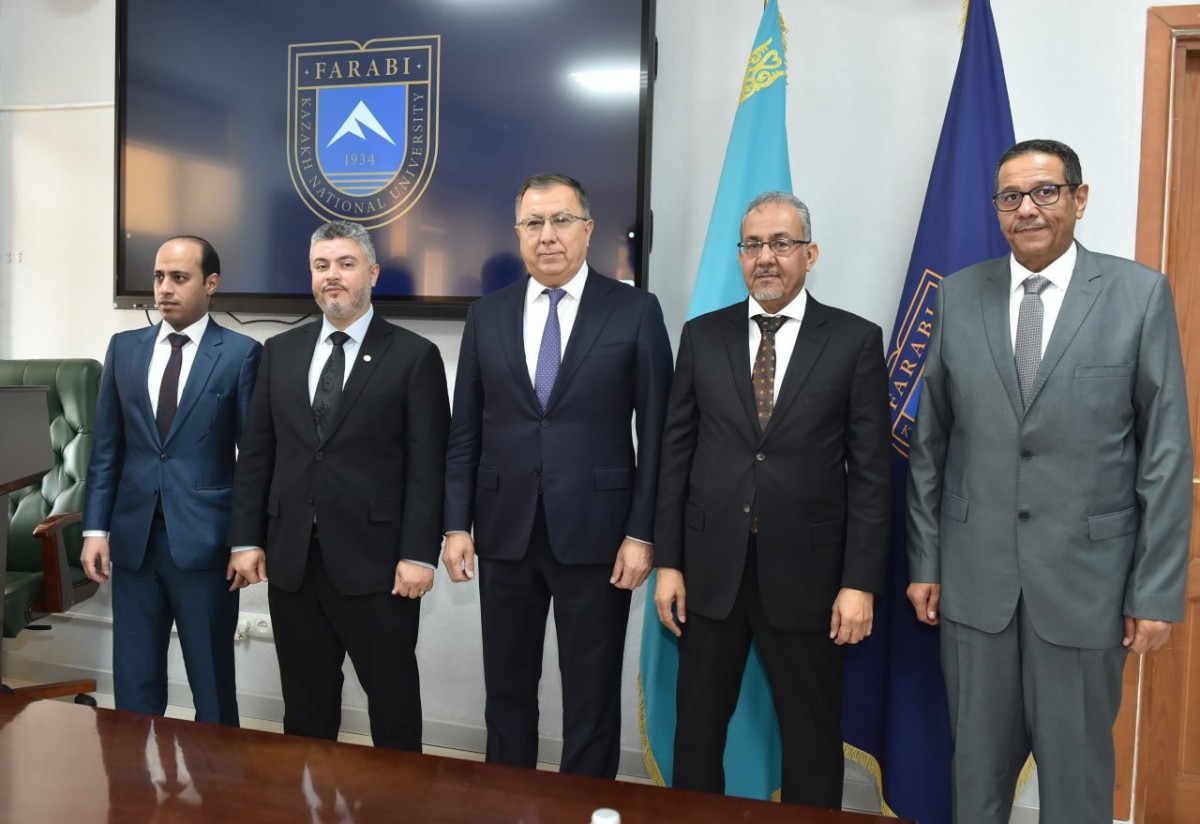
On November 11, 2025, the Al-Farabi Kazakh National University (KazNU) hosted the opening ceremony for the international event “Arabic Language Week. Central Asia / Kazakhstan.” The event was held within the framework of the Prince Sultan Bin Abdulaziz International Programme for the Arabic Language and was dedicated to the theme: “Peculiarities of Teaching Arabic for Conducting Islamic and Religious Studies.”
Attendees and Dignitaries
The solemn opening ceremony of the International Week was attended by: Rector of Al-Farabi KazNU, Professor Zhanseit Tuimebayev, Third Secretary of the Embassy of the Kingdom of Saudi Arabia in the Republic of Kazakhstan, Turki Al-Maliki, Deputy CEO of the Prince Sultan Bin Abdulaziz Al Saud Foundation, Dr. Abdulaziz Al-Maqushi, and the Head of the Foundation’s Subsequent Operations Department, Dr. Sulaiman Al-Omari, Representative of the Islamic World Educational, Scientific and Cultural Organization (ICESCO), Dr. Anas Hossam Al-Nuaimi. Along with prominent scholars in religious studies, Islamic studies, and orientalism, as well as doctoral and master’s students.
The event was opened by the Dean of the Faculty of Philosophy and Political Science, Candidate of Philosophical Sciences, Professor Bekzhan Meirbayev, who highlighted the seminar's relevance.
“This project is aimed at deepening scientific and cultural cooperation between Kazakhstan and the Islamic world, and at developing the Arabic language as a crucial tool for spiritual and scientific integration. It was organized in collaboration with ICESCO. Al-Farabi Kazakh National University has maintained relations with ICESCO for several years. Today’s ‘Arabic Language Week’ in Central Asia, including Kazakhstan, is dedicated to a highly relevant topic for our specialists: ‘Peculiarities of Teaching Arabic for Conducting Islamic and Religious Studies’,” the Dean noted.
He expressed hope that the annually held Arabic Language Week in Central Asia and Kazakhstan will contribute to enhancing the language skills of specialists and further deepening the ties between Al-Farabi KazNU and ICESCO.
The Deputy Secretary-General of the National Commission of the Republic of Kazakhstan for UNESCO and ICESCO under the Ministry of Foreign Affairs, Bakbergen Koishibayev, emphasized:
“Mastering the Arabic language is a golden bridge connecting science and civilization. Within the ICESCO framework, a Memorandum of Understanding on expanding cooperation between KazNU and ICESCO was signed on October 11-12, 2023, in Rabat, Morocco, during the 1st International Conference ‘Al-Farabi’s Contribution to Human History,’ dedicated to the heritage of Al-Farabi. We witnessed a photo exhibition and a display of works devoted to the Eastern thinker, organized by the Al-Farabi Center at KazNU. We wish for the active continuation of the strong relationship between Al-Farabi KazNU and ICESCO and for the fruitful outcome of joint events.”
Dr. Abdulaziz Al-Maqushi, Deputy CEO of the Prince Sultan Bin Abdulaziz Al Saud Foundation, congratulated the attendees on the opening of this significant event.
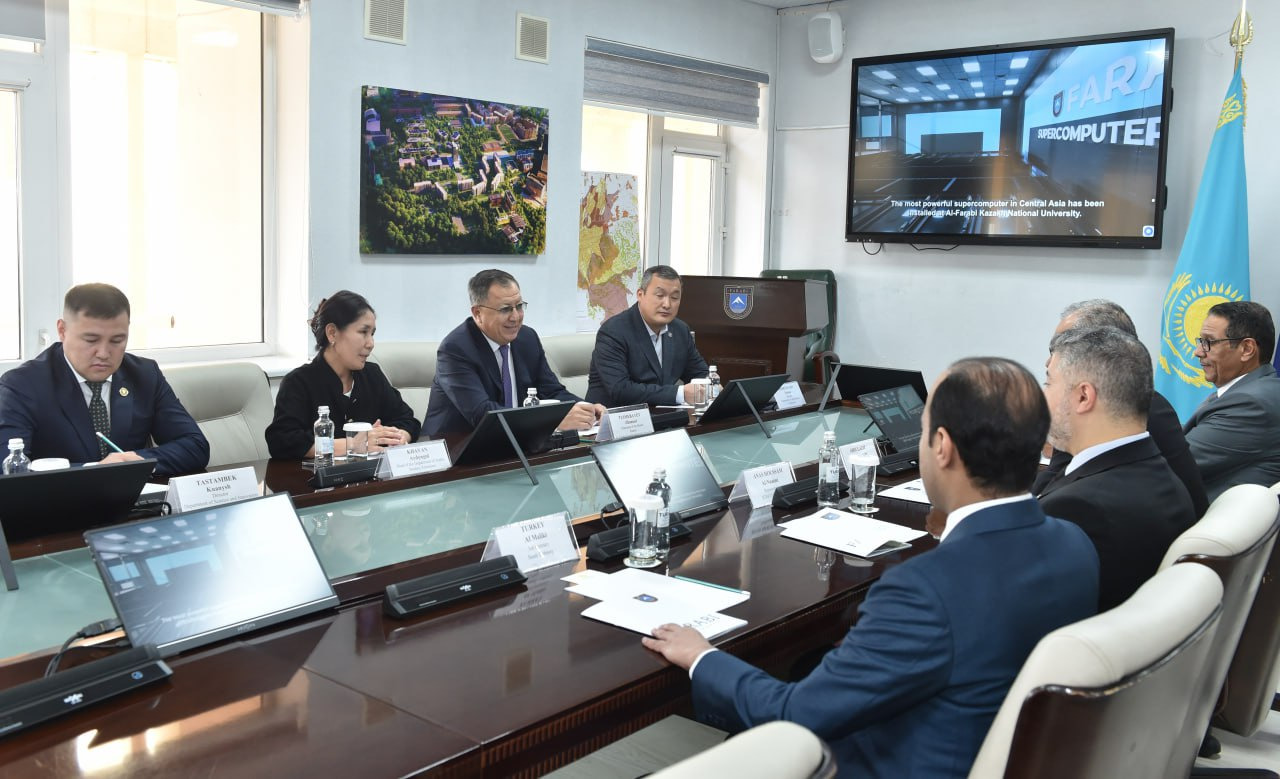
“The Kingdom of Saudi Arabia plays an important role in coordinating many projects focused on the humanities. This specific project has been implemented with the support of many governmental and private entities. For many years, our Foundation has offered numerous programs for teachers and students in non-Arabic-speaking environments. The main reason for this attention is our belief that the Arabic language is a connection between civilized states. The initial decision to approve courses for non-native Arabic speakers was made in Paris. Our Foundation aims to adhere to a specific methodology when developing and offering courses to Arabic learners. We also strive to improve education in accordance with the requirements set forth by UNESCO. We are focused on implementing educational programs for Central Asian countries,” he stated.
Dr. Anas Hossam Al-Nuaimi, the ICESCO representative and chief coordinator of the event, and partner of the Department of Religious Studies and Cultural Studies, delivered a welcoming speech on behalf of the Director-General of ICESCO, His Excellency Dr. Salim bin Mohammed AlMalik.
“I extend my gratitude and appreciation to the Republic of Kazakhstan and Al-Farabi Kazakh National University for organizing this unique program—the Prince Sultan Bin Abdulaziz International Programme for the Arabic Language—in cooperation with ICESCO and the Prince Sultan Bin Abdulaziz Al Saud Foundation. Today, we witness the launch of the third phase of this program in Kazakhstan. We express our heartfelt thanks to everyone who contributed to the successful execution of this beneficial and meaningful program. We hope this will be a good start for new collaborations in teaching and utilizing the Arabic language in the future. The educational process cannot be complete without the teacher, the student, and scientifically and methodologically grounded educational content. The program is based on an interactive approach to teaching Arabic and fully covers the four language skills: listening, speaking, reading, and writing. This methodology has been highly appreciated in the previous two phases held in Saudi Arabia and other countries, including Central Asia. We hope this positive initiative will continue in Kazakhstan. ICESCO, with its 54 Member States, has always given special importance to the Arabic language. The organization has implemented numerous programs and scientific and educational projects, both independently and through international partnerships, to preserve, develop, and promote the Arabic language globally.”
He then highlighted ICESCO’s key projects in this field, including: Workshops and training courses for specialists teaching Arabic to non-native speakers. Support programs for Arabic language education and the deployment of Arabic language teachers. International conferences, symposiums, and scientific forums on the Arabic language. ICESCO’s scientific publications on the methodology of teaching Arabic as a foreign language. Establishment of national pedagogical centers and educational hubs. Language and cultural competitions (like the "Bayan" elocution contest and "ICESCO’s Young Announcer" contest).
“The above is only a small part of the work ICESCO is carrying out for the development of the Arabic language. These initiatives are solid steps aimed at expanding the use of the Arabic language in a rapidly changing world and overcoming emerging challenges.”
The International Week will continue its work for the subsequent three days.
