


About family portraits of Abai and Tolstoy
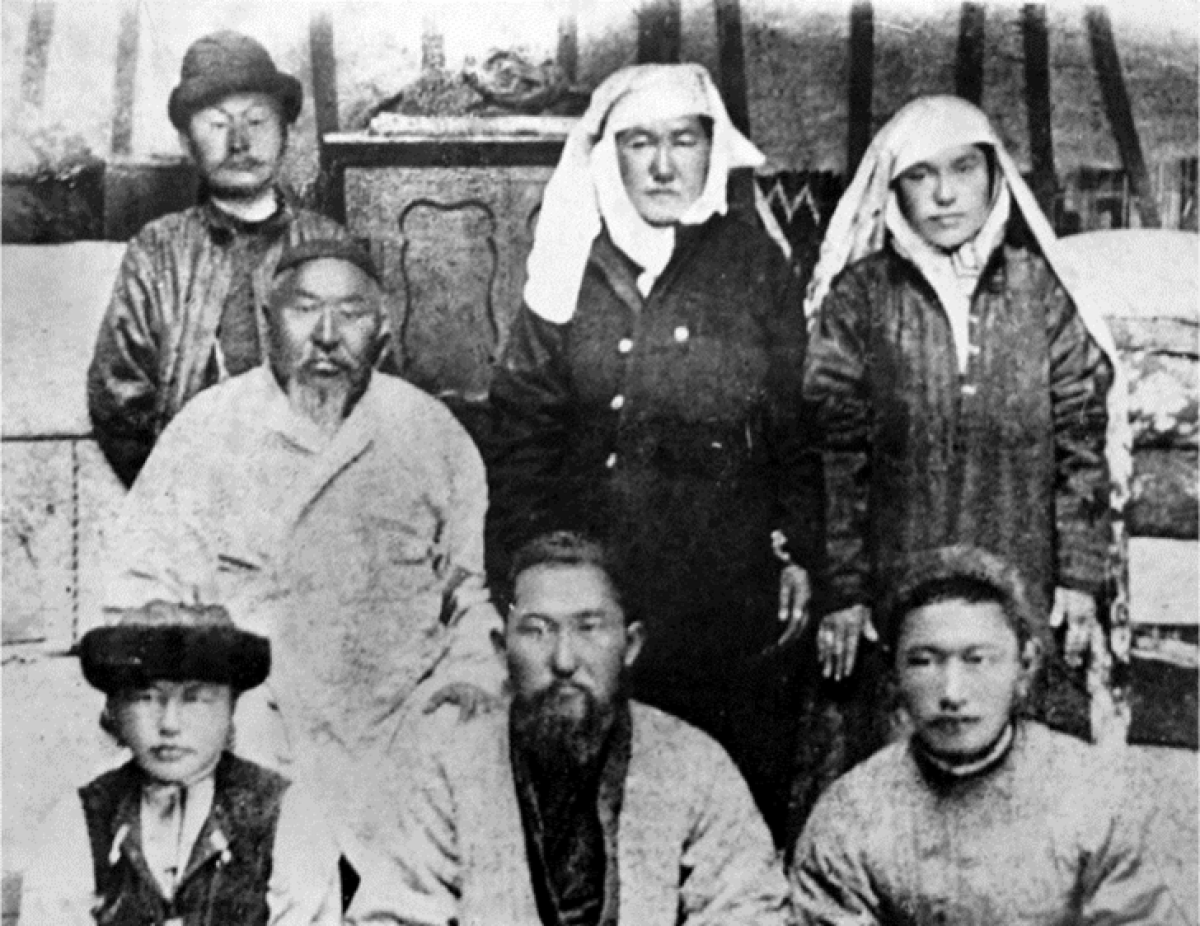
Abai Qunanbaiuly is renowned worldwide as a great poet, educator, and philosopher whose works remain meaningful to this day. Yet, despite his literary legacy, much about the private life of the founder of Kazakh written literature is not widely known. During a time when polygamy was customary, Abai had three wives — Dilda, Aigerim, and Erkezhan. Although all three were married to him concurrently, they lived in separate villages. His first wife, Dilda, married him when he was just 15 years old.
The union was arranged with the consent of both families. Like Abai, she was of noble heritage, being a descendant of the celebrated Kazakh judge Qazybek bi and a granddaughter of Alshynbai, an esteemed chief of the Argyn clan. Abai’s second wife, Aigerim, was originally named Shukiman, a name thought to mean “sweet as sugar.” The poet affectionately renamed her Aigerim — “moon beauty” — in tribute to her exceptional beauty.
At the time of their marriage, Abai was 30 and she was 19. She became his most beloved wife, and a spring at the place where they first met was later named for her. She also came from a distinguished family, being a direct descendant of Mamai Batyr, the national hero who defended the Kazakhs against the Dzungars. His third wife, Erkezhan, had been married to Abai’s younger brother Ospan. Following Ospan’s death in 1892, she wed Abai in accordance with the levirate custom and lived with him in Zhidebai during the last 11 years of his life.
The couple had no children together, but Erkezhan cared for those from her first marriage. She also shouldered the responsibility of burying key members of the Qunanbay family, including her father-in-law Qunanbai Oskembaiuly, her husbands Ospan and Abai, and Abai’s other wives, Dilda and Aigerim. Erkezhan herself was buried in Zhidebai beside Ospan and Abai, while Dilda and Aigerim were interred in Araltobe and Akshoky along the Abai highway.
From his first two wives, Abai had 10 children, who later gave him 19 grandchildren and 13 great-grandchildren. Nine of these descendants served in the Great Patriotic War, with only two returning home alive.
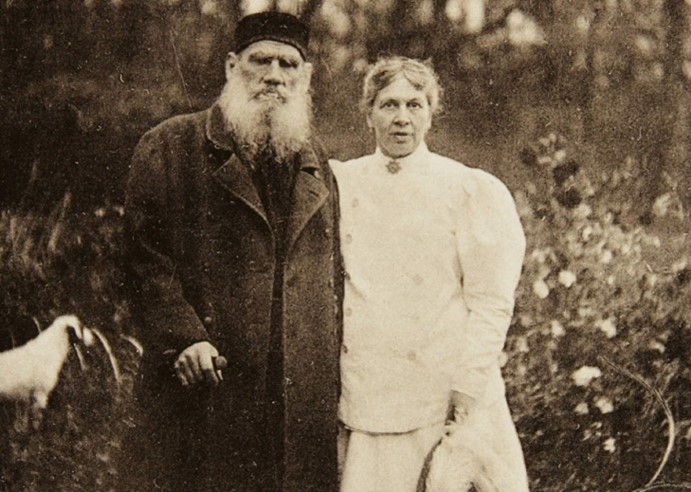
Leo Tolstoy spent nearly half a century with one woman and earned a reputation as an ideal family man, but his life before marriage was far from settled. His early years were marked by numerous romantic entanglements with women from all walks of life—maids, peasant women, society ladies, and even married women.
On the occasion of the writer’s 190th birthday, Gazeta.Ru revisited his private diaries, which reveal an ongoing struggle with desire—from the tears he shed after his first sexual encounter in a brothel to the affairs that nearly prevented his marriage. Tolstoy’s first experience of intimacy left him shaken. He recalled, “When my brothers took me to a brothel for the first time…
I stood by the woman’s bed and cried.” At nineteen, he left Kazan and entered a restless youth full of affairs, writing in his diary about a lust that had become habitual. He confessed to strolling through gardens in search of a chance romantic encounter. Not all his relationships were fleeting. At twenty-two, he fell for Zinaida Molostvova, his sister’s friend and someone else’s fiancée. They danced together often, but he never revealed his feelings and chose to leave without explanation. One of his most intense relationships was with Aksinya, a married peasant whose husband was rarely home. Tolstoy considered her strikingly beautiful and admitted to being deeply attached to her—more like a husband than a casual admirer. Their liaison ended only when Sofia Andreyevna Bers appeared in his life. Initially, Tolstoy showed interest in Sonya’s elder sister, Liza, but soon realized there was no true affection between them.
His feelings for Sonya grew after he read a short story she had written, whose unattractive yet noble protagonist reminded him of himself. At thirty-four, Tolstoy began visiting the eighteen-year-old frequently. Before long, he declared he loved her “as I did not think it possible to love,” deciding that the next day he would either propose or take his own life. Sonya agreed to marry him at once, despite her sister’s disapproval, and they wed a week later.
Yet the wedding day was bittersweet. Sonya walked to the altar in tears, for the night before, Tolstoy had given her his diary filled with explicit details of his past affairs. “Everything that happened to him is so terrible for me,” she later wrote, “that I think I will never be able to come to terms with it.”
