


Abai and the Semey Public Library: Famous books read by Abai
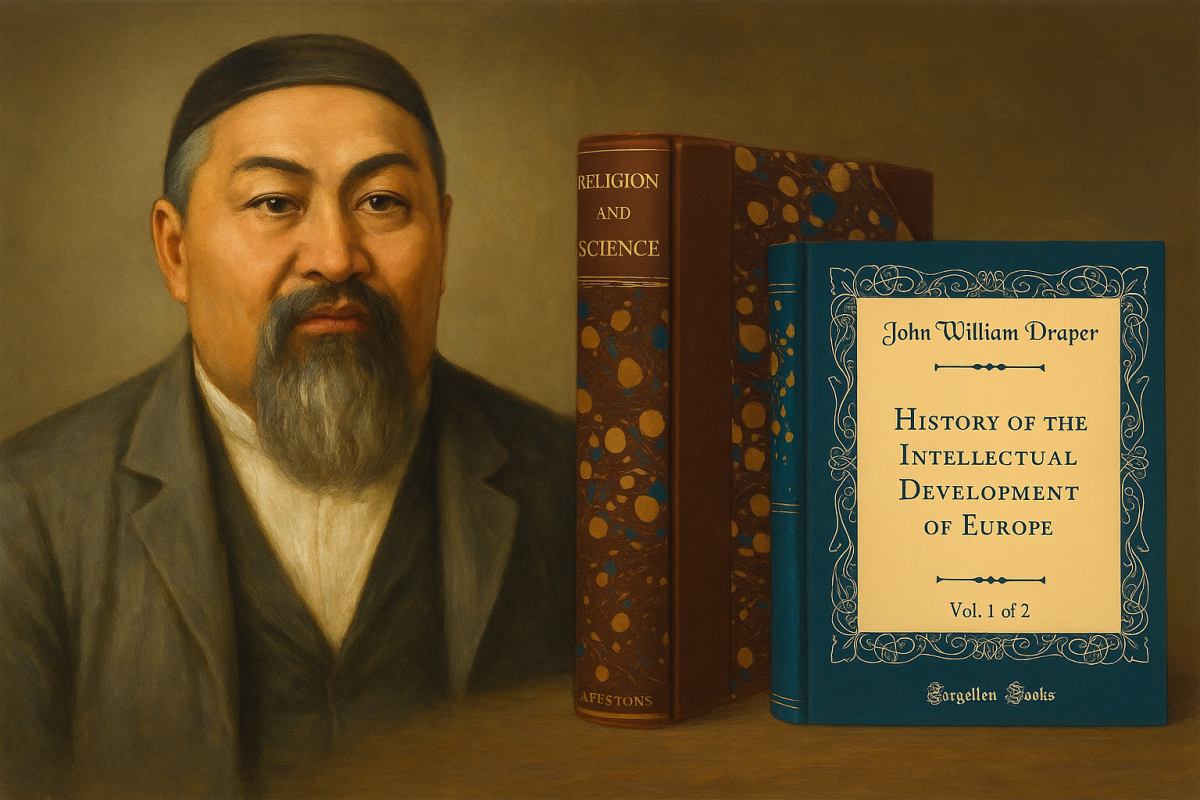
In 1883, the first modern public library in the city center of Semey, located on the banks of the Irtysh River, was established. The initiative to create the library belonged to Russian political exiles—intellectuals who had been banished to the region. Among the organizers were E. P. Mikhaelis (a close friend of Abai), A. A. Leontiev, N. I. Dolgopolov, P. D. Lobanovsky, Severin, and S. S. Gross. The founding of this library is inseparably linked to the name of Abai Kunanbayev. It is known that the poet spent long hours at the library, often staying there late into the night.
It was within this very library that Abai and Mikhaelis first met. Abai had come in search of a work by Leo Tolstoy, which happened to be in Mikhaelis’s possession, awaiting return. Upon seeing that Abai was the one requesting the book, Mikhaelis offered it to him directly. This encounter marked the beginning of a profound and enduring friendship. Their intellectual kinship would go on to shape Abai’s philosophical worldview in significant ways.
Abai would later reflect: “It was Mikhaelis who opened my eyes to the world.” This statement underscores the importance of Russian and, more broadly, Western European cultural influence—what Abai referred to as the “third spring” of his intellectual formation. Under Mikhaelis’s guidance, Abai shifted from reading books randomly to a more systematic and curated engagement with literature, literary criticism, philosophy, the natural sciences, and historical scholarship.
According to major Abai scholars, it was during this period that he read extensively from the works of prominent Russian writers and thinkers such as Pushkin, Lermontov, Tolstoy, Saltykov-Shchedrin, and Nekrasov; as well as the radical democratic critics Belinsky, Herzen, Chernyshevsky, and Dobrolyubov. His literary horizon extended beyond Russia to European figures like Goethe and Byron, and to philosophers including Spencer, Spinoza, Lewes, Darwin, and notably, John William Draper.
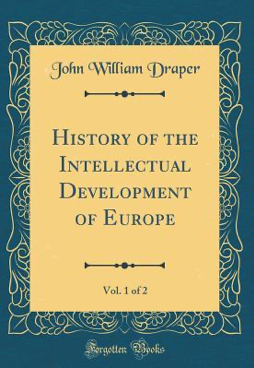
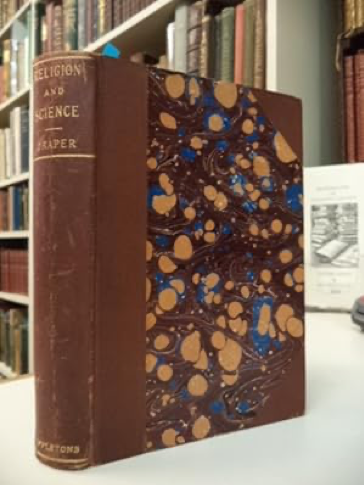
Of particular influence was Draper, an American historian and professor at New York University, whose works had been translated into Russian and widely used in institutions of higher education across the Russian Empire. Draper’s The History of the Intellectual Development of Europe (1869) and The History of the Conflict Between Religion and Science (1876) came into Abai’s hands through Mikhaelis, a former student of St. Petersburg University. It is believed that Mikhaelis, having grown close to Abai through their mutual intellectual pursuits, personally lent him these works.
Thus, Abai’s assertion that “Mikhaelis opened my eyes to the world” should not be understood as an overstatement. As the distinguished writer Mukhtar Auezov has rightly pointed out, Mikhaelis was, above all, a guide during a formative period of Abai’s life. Abai’s admiration is rooted in Mikhaelis’s role in introducing him to the intellectual legacy of Draper—whose writings offered an integrated view of the historical development of human reason, the relationship between science and religion, and the evolution of philosophical thought.
Abai scholars, including Alikhan Bokeikhanov, affirm the deep impact Draper’s works had on the Kazakh thinker. Supporting evidence appears in the American traveler George Kennan’s Siberia and the Exile System (1906), which recounts Kennan’s visit to Semey. During his stay, Kennan became acquainted with A. Leontiev, a political exile employed as a clerk in the local judiciary. Leontiev hosted a dinner in Kennan’s honor, attended by other political exiles. During a conversation at the gathering, Leontiev discussed the challenges exiles faced in accessing the library and remarked on its importance to the intellectual development of the local population. The following exchange is particularly noteworthy:
“Even the Kirghiz [i.e., Kazakhs] use the library,” said Leontiev. “I know an old Kirghiz who has read Buckle, Mill, and Draper.”
“Really? A Kirghiz?” asked a student, astonished.
“Yes,” replied Leontiev. “When I first met him, he asked me to explain the difference between induction and deduction. I was so surprised I nearly fainted. Later, in conversation, I discovered that he had been reading the works of English philosophers and the authors I mentioned.”
“Do you think he really understands them?” asked the student skeptically.
“To test him,” Leontiev answered, “I engaged him in two evenings of discussion focused on Draper’s The History of the Intellectual Development of Europe. I became convinced that he had indeed comprehended what he had read.”
The “Kirghiz” referred to here was none other than Abai. He was known to have maintained friendly relations with Leontiev, and the terms “induction” and “deduction” that he asked about are drawn from Draper’s discussion of Platonic and Aristotelian methods.
This seemingly minor detail vividly illustrates the high level of Abai’s intellectual curiosity and critical thinking. Through his reading of Draper, Abai experienced a kind of intellectual awakening. Each chapter revealed unfamiliar historical contexts, broadening his knowledge and deepening his analytical faculties.
By engaging with The History of the Intellectual Development of Europe, Abai came to understand that all natural and human phenomena are subject to immutable laws—that such laws apply equally to both living and non-living things. Draper’s The History of the Conflict Between Religion and Science further shaped Abai’s understanding of religion as the historical foundation of scientific thought. Over time, he grasped how religious dogma, hardened by ignorance and narrow interest, had come into conflict with the rational inquiries of leading minds, and how this struggle had propelled the progress of science.
