The Kazakh Khanate in the System of World History
In 2018, an article by Kazakhstani researchers Akbota Tokmurzaeva, Dauletbek Raev, and Laura Abzhaparova titled “Some Theoretical Aspects of Studying the Foreign Policy of the Kazakh Khanate” was published in the Romanian academic journal Astra Salvensis. In their work, scholars from the Abylai Khan Kazakh University of International Relations and World Languages examine how the Kazakh Khanate fit into the global system of international relations, which theories can be applied to analyze its foreign policy, and how the concepts of “national interests” and “national security” manifested in the realities of the medieval steppe.
This article is a review of that scholarly work. We will discuss how the researchers interpret the place of the Kazakh Khanate in world history, which philosophical and political concepts they employ, and why the ideas of Hegel, Marx, Morgenthau, and Nazarbayev prove to be surprisingly consonant when it comes to the politics of a nomadic state of the 16th–18th centuries
The Kazakh Khanate in the Global Context
The authors proceed from the premise that “within the framework of world history, no state can exist outside global communications.” Therefore, the Kazakh steppe civilization “was never isolated from the global process of mutual influence and exchange.” In their view, at every historical stage the Kazakh Khanate acted both as an object and a subject of international relations. This means that the khanate consistently played the role of an active participant—in relations with its neighbors in Central Asia and China, as well as in contacts with the countries of Eastern Europe and Persia.
Based on this idea, the authors refer to statements by the first President of Kazakhstan, Nursultan Nazarbayev. He emphasized the continuity of Kazakh statehood: “Although the Kazakh Khanate was established only five and a half centuries ago, it became the legitimate successor of the earlier states of the Saka, Huns, and Usuns in the Great Eurasian Steppe, as well as the later states of the Great Turkic Khaganate, Desht-i Kipchak, and the Golden Horde.” He also highlighted its historical mission: “We will rewrite the great history of the Great Steppe in a new way and instill it in the consciousness of the younger generation… This is a nationwide, important state task… Therefore, this is the noble duty of the descendants of the Great Steppe.”
This naturally raises the question: which theoretical approaches should be used to analyze the khanate’s external relations? The authors identify three main groups of concepts:
• “International relations.” A general theoretical framework describing how states and peoples interact on a global scale.
• “National interests” and “national security.” Phenomena linking a state’s domestic policy with its external objectives.
• “National power.” The aggregate of a state’s resource capabilities (military, economic, demographic, etc.) that determine its weight in the world.
Each of these concepts is examined by the authors in relation to the khanate. As a result, the international position of the steppe state, the motivations of its rulers, and its actual economic and military resources are analyzed as parts of a unified system of foreign policy.
International Relations as a Historical Phenomenon
The first concept is “international relations.” The authors emphasize that from the very foundation of the khanate, the Kazakh people were an integral part of global processes. The great nomads of the steppe maintained diplomatic ties and cultural contacts with neighboring states. The article notes that even in the poetry of Shalkiiz Zhyrau (1465–1560), there was already a reflection of the aspiration for mutual understanding between peoples: he praised the power of Bakhchisarai, the Crimean Khanate, and the Nogai Horde, calling for peace and cooperation. This demonstrates that the Kazakh Khanate, from the early stages of its existence, participated in international relations, acting not only as an object but also as an active subject of political and cultural exchange.
Theoretically, this corresponds to the classical definition: “international relations are a complex set of socio-political reality,” a global arena “in which various independent societies, organizations, political entities, states, and other actors interact, exchange, develop mutual relations, and influence one another.” Simply put, no state (even a nomadic one) could remain “outside” the exchange of information, goods, and ideas. Kazakh biys, rulers, and merchants actively used this exchange to protect and expand their interests.
According to the authors, the theory of international relations helps to systematize these connections. It formulates categories and identifies patterns in the foreign policy of the khanate. In particular, the theory serves as a tool for analyzing the khanate’s relations with other actors, tracing their evolution, and identifying stable principles. For example, the study of archaeological findings and chronicles shows that changes in trade routes and military alliances occurred for understandable reasons: the benefits of trade, threats from neighbors, and strategic interests. Theory makes it possible to organize this information and reveal the patterns underlying development.
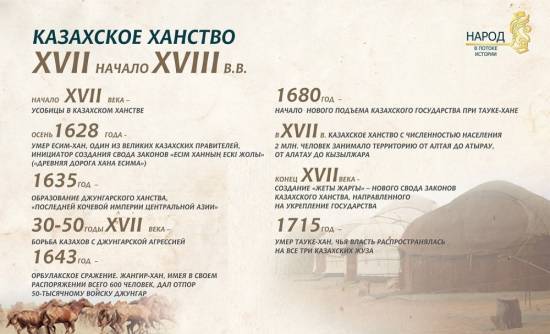
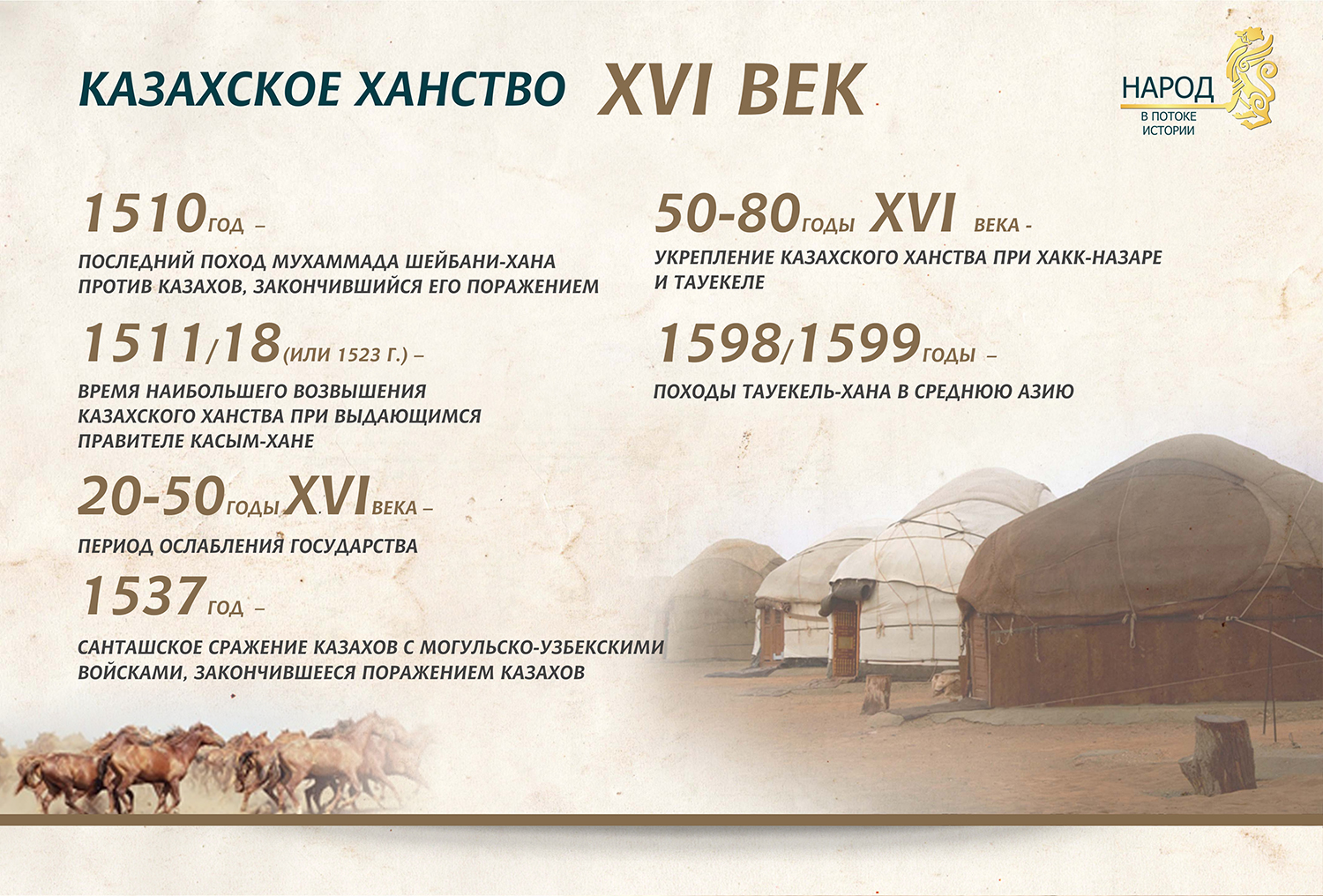
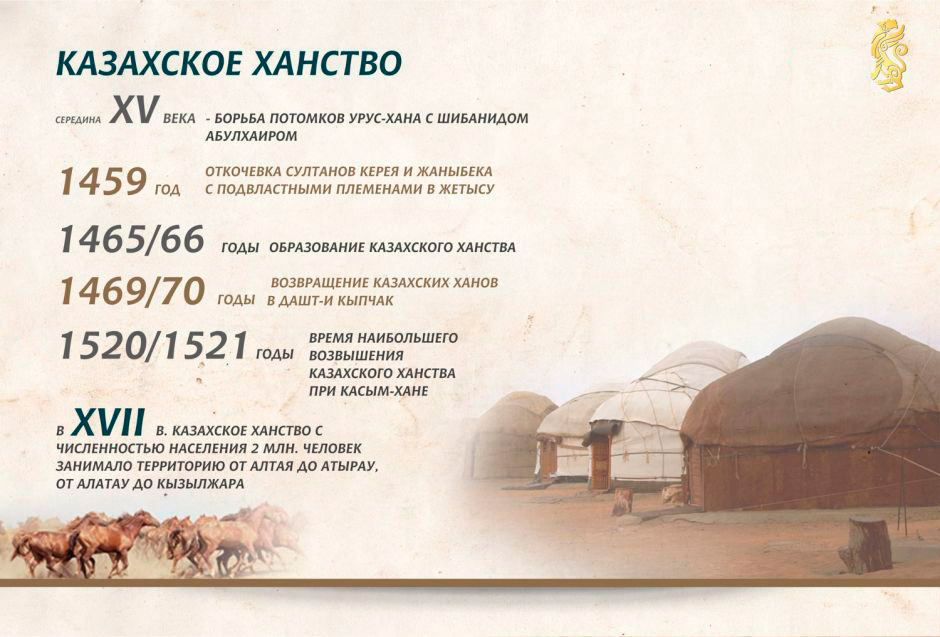
Thus, the khanate appears as an active participant in world history. The history of the state is presented as a series of stages, each fitting into a coherent logical chain. From this perspective, the Kazakh Khanate is not a случайное образование, but a закономерный этап развития Евразийского региона— a natural stage in the development of the Eurasian region. It emerged at a complex time—when transformative processes were unfolding on other continents (the Renaissance and Reformation in Europe, the rise of dynasties in Asia)—and became integrated into these broader trends. This conclusion is supported by the research of the well-known historian B. Karibaev, who noted that the khanate “actively participated in regional processes as a strong actor.” In other words, the international relations of the khanate should be considered in the context of world history—as part of the universal communication among peoples.
See also: The Kazakh Khanate: A Brief History of Its Formation
World History and the “Law of Necessity”
The authors turn to the philosophical foundations of the historical perspective. They discuss two opposing paradigms of history: the first views it as a single, unified process (from the standpoint of Georg Wilhelm Friedrich Hegel, Karl Marx, and others), while the second sees it as a collection of separate civilizations (the school of Oswald Spengler, Nikolay Danilevsky, and others). In the context of the khanate, the researchers lean toward the first approach: they believe that history develops through major stages, while different societies simply pass through their own phases. From this perspective, the Kazakh Khanate is a natural link in global development rather than an isolated phenomenon.
A key thesis here is the idea of the “necessity law.” The authors cite classical statements: Georg Wilhelm Friedrich Hegel argued that “history is a process of development through causes,” Karl Marx believed that economic and social laws drive society, and even Karl Popper, while rejecting the idea of a single overarching law, emphasized the importance of analyzing cause-and-effect relationships. The essence is that all events have their causes. For example, the ancient Greek philosopher Thales of Miletus stated: “The most powerful thing is necessity, for it rules over everything.” Applied to the khanate, this means that its foreign policy should also be understood as the result of objective motives, rather than a set of random events.
Historical examples support this view. In the second half of the 18th century, the Qing Empire sought economic growth and the strengthening of its borders; therefore, it established relations with the Kazakhs precisely for these purposes. Chronicles of the time note: “The Kazakhs breed a large number of horses. By trading and exchanging with them, it is necessary to meet the needs of both internal and distant regions.” In other words, China pursued its own interests, not the “promotion of the khanate’s prosperity.” The authors emphasize that “world history is the result of communication” among peoples (citing Hesselbach: “Interaction is a means of communication. World history is its result”). Thus, any contacts between the khanate and other countries were part of a broader historical process and driven by objective necessity.
In this way, historical “necessity” and the interconnectedness of peoples are treated as givens. Changing alliances, trade, and wars of the steppe appear as links in a single chain. The researchers conclude that the khanate was always embedded in the global context, and its foreign policy followed the same laws of dialogue and conflict as that of other states.
National Interests and National Security
The second group of key concepts is “national interests” and “national security.” The authors emphasize that these categories are inseparable. They define “national interest” as the set of a state’s primary goals (preservation of independence, territory, the well-being of the people, etc.), and “national security” as the mechanism for protecting these interests from threats (military, economic, environmental, and others). In the theory of international relations, these concepts are always considered together: national security exists to ensure and safeguard national interests.
The researchers analyze these terms in detail. “Security” is understood as the “absence of threat or danger” and as the “protection of interests” alongside the “ability to resist threats.” Different levels of security are identified: global (worldwide), regional, national, and local. For the khanate, the primary concern was national security—the protection of the steppe state from external invasions and internal unrest. This included not only military strength but also diplomacy: for example, the formation of alliances and treaties to repel aggressors. The khanate’s state security policy was aimed at ensuring that no external interference would threaten its independence and order.
These ideas find parallels in the statements of various thinkers. For instance, the French political scientist Philippe Moreau Defarges noted that every state must construct its security with regard to its territorial characteristics. Theodore Roosevelt was among the first to introduce the term “national interest” as an instinct of national self-preservation. The American researcher David Fisher included even natural disasters and geographical challenges among potential threats. All of this aligns closely with the understanding of security in the khanate: one must take into account landscape, climate, neighbors, and other objective factors when protecting national interests.
Political Realism and New Challenges
In examining international security theory, the authors rely on political realism. Classical realists such as Hans Morgenthau, Walter Lippmann, and Arnold Wolfers linked state security to the preservation of national interests through the prism of power. Morgenthau argued that states protect their interests in order to ensure their own security. Lippmann associated national security with military defensive capabilities, while Wolfers viewed security as one of the key goals of states alongside other values.
Within the realist framework, according to the authors, “the most important elements of national security are national interests, the intensification of rivalries between states, and the decisive role of state power and strength.” In other words, the main task is to preserve sovereignty and status through force or a balance of power. For the khanate, this meant either having a strong ally, being capable of defending its sovereignty by force, or both. The authors emphasize that the khans’ policies were based on the same principle later followed by European monarchs—maintaining balance and preventing the hegemony of rivals.
See also: On the Terms “Kazakhs” and “Kazakh State” in Historical Sources
However, the authors also note modern transformations: alongside classical threats (wars and conquests), new ones have emerged—economic crises, environmental disasters, information warfare, and others. National security has increasingly come to be viewed as a global task requiring international cooperation. Nevertheless, traditional instruments remain relevant. States still rely primarily on military power and diplomatic maneuvering to protect their interests. This is confirmed by the experience of the 20th century. For example, during the Cold War, two military-political alliances—the Warsaw Pact and NATO—served as instruments of global confrontation. The Warsaw Pact defended socialist countries, while NATO represented the Western bloc. After the dissolution of the Warsaw Pact in 1991, NATO adapted by expanding its influence eastward, including into former socialist republics, and continues to actively uphold the security of its members worldwide. This example shows that the concepts of security and national interests have maintained a consistent logic over centuries—both in the modern world and in the past.
The Practice of the Foreign Policy of the Kazakh Khanate
After outlining the theory, the authors turn to the history of the khanate and find its principles confirmed by concrete examples. They note that as early as the second half of the 17th century, the ideas of national interests and security were clearly expressed in the khanate’s policy. These ideas were promoted by khans, biys, akyns, and batyrs. Biys (judges) in Kazakh society were traditionally regarded as guardians of the people’s interests and often took part in decisions concerning the khanate’s foreign policy. They “contributed to resolving important issues of the khanate’s policy, guided by the interests of the state,” the authors note.
Ideas of defending the homeland are also found in folklore. The authors cite several well-known sayings of Kazakh sages of the 17th–18th centuries:
• “Do not remain idle if an enemy has attacked your friend” (Asan bi).
• “You have warriors capable of raising the banner, you have brave men ready to defend the homeland… If you kneel before the enemy, you will condemn yourself to suffering” (Tole bi).
• “If an enemy has attacked your land—take up arms and defend the homeland” (Zhetes bi).
• “When the enemy is at the gates, your duty is to defend the homeland to the last drop of blood” (Bertis bi).
• “We are ready to die for the fatherland and the people” (Aktamberdy zhyrau).
• “We must defend our land and never surrender” (Dospambet zhyrau).
These teachings demonstrate that for the Kazakhs, national self-preservation was a natural principle. The idea of unity between the people and the state became the norm. When the khanate conducted negotiations, this understanding formed the basis of its diplomacy. In the letters of the Persian Shah Abbas II of Persia (late 17th – early 18th centuries) to Khan Tauke, issues of the security of trade caravans and borders were discussed. Historian K. Kari noted that “the Persian shah paid particular attention to the origin of the khan… the Persians were well aware that he was a descendant of Genghis Khan. Therefore, when addressing rulers, Persian shahs emphasized the greatness of Genghis Khan.” This highlighted the khan’s status and respect for him, while also demonstrating an interest in cooperation that protected the interests of both sides.
Another important channel was relations with China. In the mid-18th century, Kazakh and Chinese embassies actively developed trade: caravans brought furs, wool, and horses to China, and returned with silk, porcelain, and other goods. According to Meruert Abuseitova, the main goal was clear: “to establish and develop trade cooperation between the two peoples, as well as to protect and realize the national interests of their countries.” Historical chronicles confirm that this period should be considered “one of the most prosperous and vivid stages in the history of the Great Silk Road.” The author of this research emphasizes that relations with China were driven by clearly defined interests on both sides, as reflected in official documents of the time.
Thus, both folklore and diplomacy reflect the core principles of the theory. State and public figures of the khanate took national interests into account when making decisions: military alliances were concluded to deter threats, trade agreements for economic benefit, and cultural exchange to strengthen ties. It was considered self-evident that the khanate must protect its sovereignty, economy, and people by all available means.
See also: The Kazakh Khanate in the 16th Century
National Interests as the Foundation of Foreign Policy
In conclusion, the authors arrive at their main point: national interests are the foundation of foreign policy. They unify all of a country’s efforts on the international stage. From this follows a key principle: without national interests, there is no national security, because security exists to protect them. As the renowned jurist Rudolf von Jhering observed, personal security is a “legally protected interest.” The Russian thinker Georgy Plekhanov wrote that “any norms of security are aimed at protecting a particular interest.” National interests and security are interdependent, but interests are primary.
The concept of national interests took shape in the early 20th century: Reinhold Niebuhr and Charles Beard introduced it into scholarly discourse. The idea was further developed by Hans Morgenthau, George Kennan, Walter Lippmann, Kenneth Waltz, James Rosenau, and others. Morgenthau, for example, stated that “national interests reflect the enduring foundations of a state’s foreign policy.” Russian scholars have also explored this issue. According to Kamil Gadzhiev, “higher and stable interests” are determined by a country’s geopolitical position—its role on the world map, status, and military and economic power. In other words, the size and influence of a state shape the priorities it sets in foreign policy.
The authors also divide interests into higher (permanent) and operational (temporary). Higher interests include, for example, the preservation of territory and sovereignty; operational interests involve specific economic or political goals at a given moment. The key point, the researchers emphasize, is that these interests must be implemented comprehensively, taking into account socio-economic, legal, and cultural conditions. They also highlight the perspective of the liberal and idealist schools: the main component of national interest is the survival and development of society. This aligns with the modern understanding in Kazakhstan, where economic growth, the protection of citizens’ rights abroad, and the expansion of cooperation are seen as national interests.
Conclusion
The work of Tokmurzaeva, Raev, and Abzhaparova demonstrates that the history of the foreign policy of the Kazakh Khanate can be analyzed using the same concepts and laws as the modern history of other states. The khanate was a full-fledged participant in international relations, acting in accordance with the “law of communication” among peoples: it traded, formed alliances, and resolved conflicts. At the same time, the khans were guided by national interests and principles consistent with the theory of political realism: they strengthened their power, sought to maintain a balance of forces, considered external threats, and fulfilled their internal mission.
Put simply, the actions of medieval rulers reveal the same ideas we encounter in modern textbooks on international relations. National interests determined the course of the khanate, while national security served as the instrument for their protection. Folk proverbs and chronicles suggest: “Always defend your land and remain loyal to your own—this is everyone’s duty.” Translated into the language of theory, the authors conclude that to understand how the Kazakh Khanate operated on the world stage, one must keep in mind enduring political categories—national interests, security, and the balance of power. In this way, Kazakhstan’s past appears as part of the same logic that shapes the world today.