


How the Alash Movement Tried to Build a Kazakh State
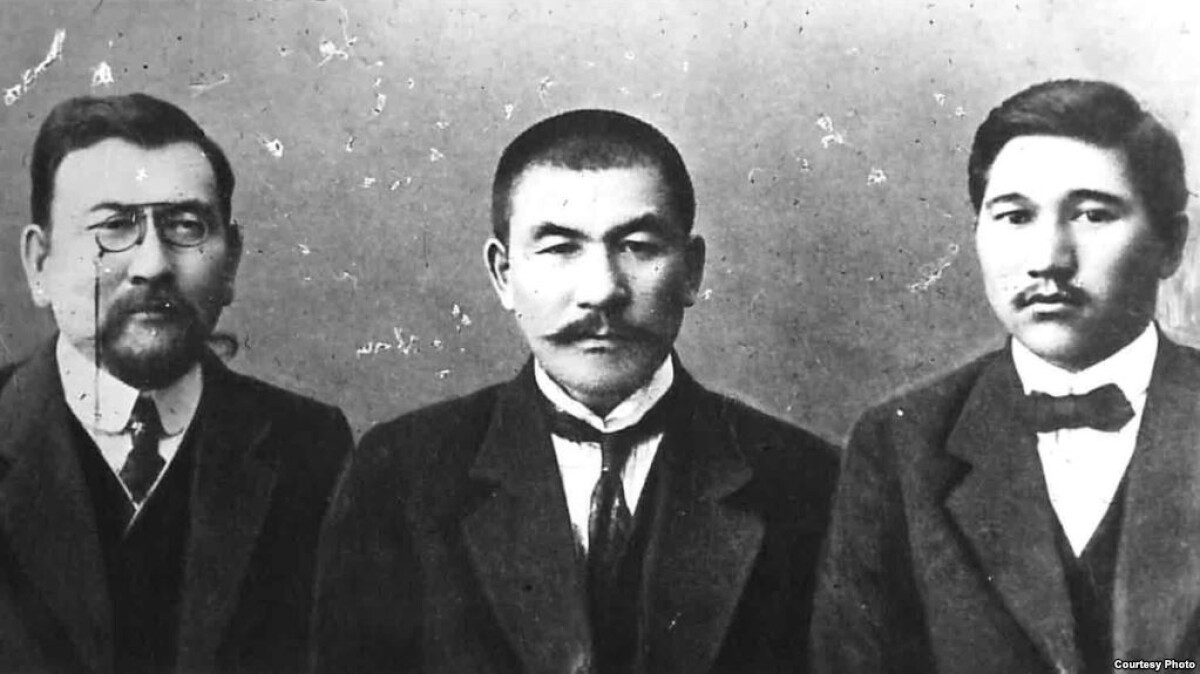
The revolutions of 1917 created a brief political opening for the peoples of the Russian Empire. For the Kazakh national intelligentsia, the collapse of imperial authority raised an urgent question: could Kazakhstan acquire its own political institutions and govern its territory through a national autonomy?
In “The Alash Party On The Kazakh Statehood,” published in Astra Salvensis in 2018, Alima Auanasova, Kamilla Auanasova, Bolat Zhumagulov, and Gani Karasayev examine the Alash Party’s attempt to answer that question. They present the proclamation of the Alash Autonomy, the establishment of the Alash-Orda government, and the party’s political program as a major stage in the development of modern Kazakh statehood.
The Alash project did not call for immediate and complete separation from Russia. Its leaders sought a national-territorial autonomy within a democratic Russian federation. Nevertheless, their program included many of the basic elements of state government: a defined territory, an executive authority, representative institutions, courts, education in the Kazakh language, control over land, and an armed militia.
From Revolution to Autonomy
After the February Revolution of 1917, the weakening of central power encouraged national movements across the former Russian Empire. Kazakh intellectuals believed that the new political conditions might make national self-government possible.
The Bolshevik uprising in Petrograd in October 1917 made the situation more urgent. Alash leaders feared both political disorder and the transfer of power to the Soviets. They therefore moved toward formally declaring an autonomous Kazakh political entity.
The central decisions were made at the Second All-Kazakh Congress, held from 3 to 13 December 1917. After discussing a report by Khalel Gabbasov on autonomy and the creation of a national militia, the delegates agreed that the proposed autonomy should be a national-territorial formation.
The Alash Autonomy was intended to unite the principal territories inhabited by Kazakhs. These included the Bukey Horde and the Ural, Turgai, Akmola, Semipalatinsk, Syr Darya, Semirechye, and other regions, as well as Kazakh-populated districts of the Altai area.
The territorial principle was politically important. The Alash leaders were not proposing a cultural association without governing powers. They wanted an autonomous political unit whose authority would extend over a defined population and territory.
Alikhan Bukeikhanov later explained that the congress had decided to establish national-territorial autonomy without waiting for approval from the Russian Constituent Assembly. According to his account, the immediate purpose was to prevent anarchy in the Kazakh steppe and resist the spread of Bolshevism.
At the same time, the Alash leadership still expected the Constituent Assembly to provide the project with formal legal recognition. They hoped that Russia would become a democratic federation in which Kazakhstan could exist as a self-governing national republic with broad powers.
Creating the Alash-Orda Government
To exercise executive authority, the congress established a Provisional People’s Council called Alash-Orda. It was instructed to begin governing the Kazakh population and to create a stable administration during a period of political collapse.
The government was to consist of twenty-five members. Fifteen were elected at the congress, while ten seats were reserved for Russians and representatives of other peoples living in the territory of the proposed autonomy. The congress also promised cultural autonomy, minority rights, and proportional representation for non-Kazakh communities.
This arrangement reflected the Alash leaders’ attempt to combine national self-government with political inclusion. Although the autonomy was based on Kazakh territorial and national interests, it was not formally designed as a government exclusively for ethnic Kazakhs.
Among the elected members were Khalel Dosmukhamedov, Khalel Gabbasov, Mustafa Shokay, Alikhan Yermekov, Mukhamedzhan Tynyshpayev, Zhahansha Dosmukhamedov, and other prominent representatives of the national intelligentsia.
The chairman was chosen through a competitive secret ballot. Three candidates were nominated: Alikhan Bukeikhanov, Bakytgerey Kulmanov, and Aidarkhan Turlybayev. Bukeikhanov received forty votes, compared with twenty for Turlybayev and nineteen for Kulmanov, and became chairman of the government.
Alash-Orda was based in Semipalatinsk. A western branch was later created to administer the western territories of the autonomy.
These measures demonstrated that Alash was attempting to move beyond political declarations. Its leaders sought to create an operating government with a central administration, regional representation, and a defined legal and territorial basis.
Building a National Militia
The congress also decided to establish a Kazakh militia. Its purpose was to maintain order, protect the autonomy, and resist Bolshevik forces.
The proposed force was to include 13,500 men recruited from several regions. Service was expected to be based on voluntary enlistment, although selection by lot could be used if necessary. The plan also called for almost 69 million rubles to be collected for the militia’s organization.
Weapons were to be supplied by the central administration and financed through taxation. For officer training, Alash leaders hoped to receive assistance from the Orenburg Cossack forces led by Ataman Alexander Dutov.
The alliance with anti-Bolshevik forces was largely ineffective and later complicated Alash-Orda’s position. Russian military leaders and the Provisional Siberian Government did not fully trust the Kazakh autonomy and suspected its leaders of separatism. Alash therefore found itself politically vulnerable: it opposed Bolshevik rule but could not rely on consistent support from the Bolsheviks’ opponents.
A Program for Autonomous Government
The Alash political program offered a more detailed vision of statehood than the proclamation of autonomy alone.
Its leaders described a federation as a union of smaller self-governing states whose members would possess equal rights and independently administer their internal affairs. Kazakhstan was expected to enter such a federation as an autonomous state rather than as an ordinary province controlled from the center.
The program gave particular importance to language and the legal system. In Kazakh-populated areas, court proceedings were to be conducted in Kazakh, and judges or jurors were expected to understand the customs and traditions of the local population. At the same time, the party declared that all peoples should be equal before the law.
Education was another central concern. Primary schooling was to be conducted in the native language. This provision linked political autonomy with the preservation and development of Kazakh culture.
The program also addressed military organization. It recognized the need for permanent defense forces but drew on the principle of a people’s militia. Military units could be organized around existing social and kinship ties, which the party believed would strengthen solidarity and morale.
Land policy was equally important. Alash argued that the indigenous population should receive priority in the distribution of land. In a society where control of territory was closely connected with economic survival, this was not merely a social policy but an essential part of national autonomy.
Taken together, these proposals amounted to a broad constitutional program. They addressed political representation, executive authority, justice, education, defense, minority rights, language, and land ownership. The authors of the study argue that this program could have provided a foundation for a Kazakh autonomous state.
Why the Project Failed
The Alash project emerged in exceptionally difficult circumstances. Russia was moving from revolution into civil war, state institutions were collapsing, and competing governments claimed authority over the same territories.
The Alash leaders also faced divisions within Kazakh society. Political actors were increasingly classified as either revolutionary or counterrevolutionary, leaving little space for an independent national-democratic movement.
The Bolsheviks rejected the Alash model because it did not conform to their conception of Soviet autonomy and proletarian rule. Meetings between Alash representatives and Bolshevik leaders failed to produce an agreement on the status of Kazakhstan. Instead, the administration of Kazakh territories was entrusted to revolutionary committees created by the Soviet authorities.
Although the Bolsheviks proclaimed the right of nations to self-determination, the constitutional position of national republics remained unclear. The 1918 Constitution of the Russian Soviet Federative Socialist Republic referred to a federation of Soviet national republics but did not clearly define their powers or legal status.
Bolshevik leaders increasingly portrayed Alash and similar movements as bourgeois nationalist organizations. In 1918, Joseph Stalin called for such autonomies to be stripped of their existing political character and transformed into Soviet autonomies.
Alash also received little support from anti-Bolshevik Russian forces. Supporters of a unified Russian state generally opposed national autonomy for non-Russian peoples and viewed the Alash program as a potential threat to territorial unity.
The movement was therefore caught between two incompatible forces. The Bolsheviks rejected its national-democratic program, while many of their opponents distrusted any form of Kazakh territorial self-government.
The Alash leaders themselves recognized that immediate full independence would be extremely difficult. Kazakhstan remained economically underdeveloped, politically fragmented, and without durable national institutions capable of defending sovereignty and territorial integrity against Russia. For that reason, the party pursued broad autonomy within a federation rather than complete separation.
The Legacy of Alash
Alash-Orda was unable to turn its program into a lasting political system. The autonomy operated during the Civil War, but its authority was unstable, and the government eventually ceased to function.
Its historical importance, however, does not depend only on its institutional survival. The Alash movement formally declared a political platform, created a representative government, defined a national territory, and attempted to establish the administrative and military foundations of autonomous statehood.
Its leaders also demonstrated that a Kazakh political movement could formulate a program addressing both national interests and the rights of other communities. Their vision combined territorial autonomy, democratic federalism, legal equality, minority representation, education in the native language, and protection of indigenous land rights.
The project failed because the political conditions of the revolution and Civil War left little room for an autonomous national-democratic alternative. Yet its failure did not erase its significance.
The study concludes that the Alash movement contributed to the development of Kazakh national identity and strengthened the idea that the Kazakh people required political consolidation and institutions of their own. Although its leaders could not establish the state they envisioned, they transformed Kazakh statehood from a historical memory and political aspiration into a concrete program of government.
