


Otyrar and the Great Silk Road: How a Medieval City Became a Crossroads of Eurasia?
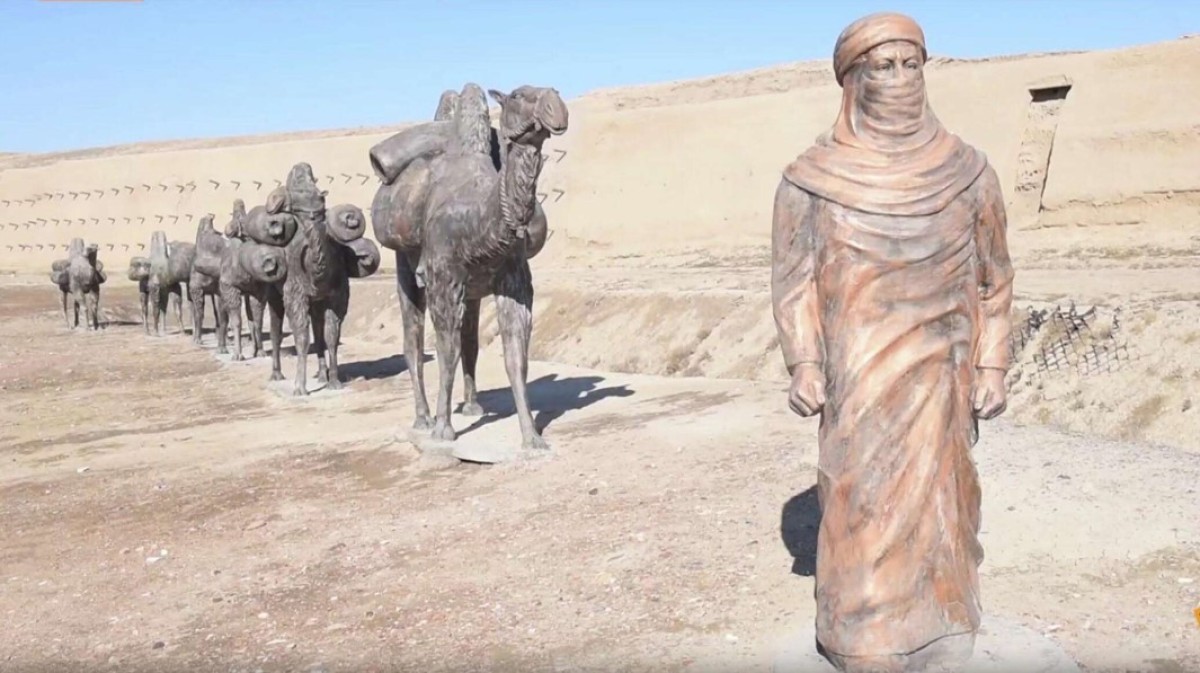
Otyrar was one of the most important cities in Central Asia during the Middle Ages and held a prominent place along the Great Silk Road. Its strategic location contributed to its development as a major center of trade, crafts, culture, and intellectual life.
Otyrar’s history goes back many centuries. At different periods, the city was known by names such as Turar, Turarkent, and Farab. It was located in the Otyrar oasis, near the Arys River and the Syr Darya. The availability of water and fertile land supported agriculture, irrigation, and urban development.
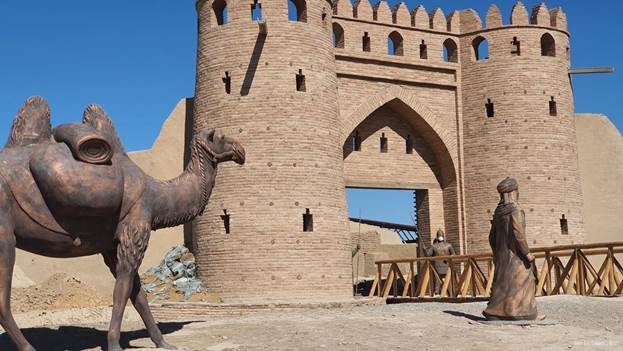
Otyrar’s geographical location was one of the main factors behind its importance. Situated at the crossroads of several Silk Road routes, the city was visited by caravans traveling between China, Central Asia, and other parts of Eurasia. For centuries, traders and their caravans passed through Otyrar, bringing goods, ideas, and cultural traditions from different regions.
A trading center on the Great Silk Road
In the 9th and 10th centuries, Otyrar developed into a major economic and trading center. Merchants traveling along the Silk Road brought a wide range of goods to Otyrar. Silk, textiles, pottery, metal products, jewelry, weapons, and other goods were traded in the city. Some of these products came from distant regions, while others were made by local artisans.
Otyrar was therefore more than just a place where passing caravans stopped. Craft production played a significant role in the local economy. Jewelers, potters, smiths, and other craftspeople produced goods for local use and trade.
Coins found in the area also provide evidence of the city’s economic activity. Coins from various periods are among the archaeological discoveries in the Otyrar region that point to active trade and economic ties with other parts of Central Asia.
A meeting place of cultures
The Great Silk Road was more than just a system of commercial routes. In addition to goods, languages, customs, technologies, scientific knowledge, and religious beliefs also spread across the region.
Otyrar was at the center of this cultural exchange. Local residents maintained ties with neighboring states and cities, while people from other regions also came to Otyrar.
The spread of Islam throughout the region was one of the major developments of the medieval era. Writing, education, and scientific thought developed as Islamic culture gained prominence. Otyrar gradually became part of the wider intellectual and cultural world of Central Asia.
Otyrar and the development of science
The cultural significance of Otyrar is especially evident in its connection with Abu Nasr al-Farabi, an outstanding philosopher and scholar of the medieval Islamic world.
Al-Farabi was born in the region of Farab, which was historically associated with the Otyrar oasis. He became well known for his works on philosophy, logic, mathematics, music, and other fields of knowledge.
His legacy shows that the cities of the Great Silk Road were not only centers of trade. They also created conditions for the development and spread of knowledge. Through constant contact between different regions, scientific and philosophical ideas could travel with people and books.
Otyrar became part of this intellectual network, and the name of al-Farabi has remained closely connected with the scholarly heritage of medieval Central Asia.
Otyrar during the Mongol invasion
In the 13th century, Otyrar became the setting for one of the most dramatic events in the history of Central Asia.
In 1218, a trade caravan from the Mongol Empire arrived in Otyrar. After a conflict between the caravan’s merchants and the city authorities, relations between the Khwarazmian state and Genghis Khan deteriorated sharply.
In 1219, Mongol forces laid siege to Otyrar. The city resisted for several months before eventually being captured and destroyed.
The destruction of Otyrar was part of the wider Mongol conquest of Central Asia. The wars led to major political and economic changes in the region and disrupted established trade networks.
However, the city did not disappear permanently. In the following centuries, Otyrar was rebuilt and continued to exist, although its role and importance changed as the political situation in Central Asia evolved.
The archaeological heritage of Otyrar
Ancient Otyrar is now one of Kazakhstan’s most important archaeological sites. Excavations have provided valuable information about the city’s architecture, crafts, trade, and everyday life.
Archaeologists have uncovered the remains of residential areas, workshops, public buildings, and irrigation systems. Other archaeological discoveries include coins, ceramics, and artifacts that point to Otyrar’s wide-ranging connections with different regions.
The history of Otyrar shows that the Great Silk Road was much more than a route for transporting silk and other goods. It was a vast network through which different societies exchanged products, knowledge, technologies, and cultural traditions.
Otyrar played an important role in this network. Its favorable location turned it into an important trading hub, while the development of crafts, culture, and science made it one of the notable centers of medieval Central Asia.
Today, the history of Otyrar reminds us of the important role that the territory of modern Kazakhstan played in connections across Eurasia. For centuries, the city was part of a space where trade routes, peoples, and cultures met, leaving a significant mark on the history of the region.
Material prepared by: Aziza Safiollina
