


Kozha and Freud: Secrets of the Psyche of a Hero of Kazakh Cinema
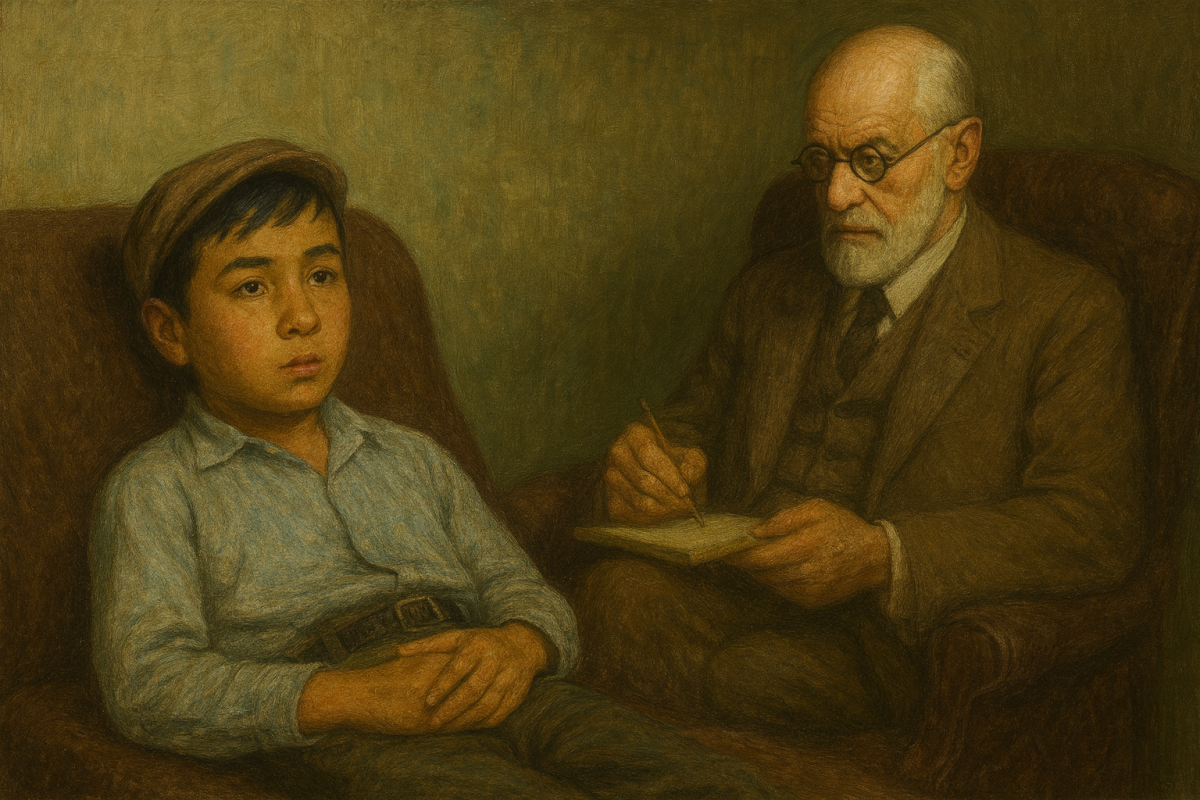
In 2018, Kazakh researchers Yerzhan Jumbekov, Kanat Kadyrbekov, Baubek Nogerbek, and Zhanar Orazalieva published the article “Kozha’s Character as an Object of Psychoanalysis” in the journal Astra Salvensis. The study offers one of the first attempts to interpret the Soviet Kazakh film classic My Name Is Kozha through Sigmund Freud’s psychoanalytic theory. The authors believe that this approach helps reveal not only the psychology of one mischievous schoolboy, but also deeper mechanisms of childhood, desire, guilt, fear, and moral growth
The research says that Kozha is not simply a naughty child or a comic hero. He is a contradictory personality whose inner world is divided between impulse and self-control. In the famous mirror scene, Kozha promises himself that he will stop fighting and misbehaving, but immediately begins arguing with his own reflection. The authors believe this dialogue shows a conflict between the unconscious “id,” which pushes him toward mischief, and the conscious “ego,” which tries to discipline him. Kozha understands that he should change, but he is still unable to fully control his desires.
The study also connects Kozha’s behavior with his strong attachment to his mother. Since his father died in the war, his mother becomes the central emotional figure in his life. The authors believe that many of Kozha’s pranks are attempts to win her attention and love. When his mother considers marrying Karatai, Kozha sees the future stepfather as a rival. The research says this situation can be explained through Freud’s Oedipus complex: the boy wants to remain the main object of his mother’s affection and fears being replaced by another man.
At the same time, Kozha’s rebellion is not treated as pure negativity. The authors believe that his fights, tricks, smoking, lies, and defiance of school rules are also part of his movement toward independence. Through these mistakes, he tests social boundaries and begins to form his own moral center. The research says that Kozha’s “super-ego,” or conscience, is still developing. His behavior may look arrogant or aggressive, but behind it lies the process of becoming a separate person.
The article gives special importance to Zhanar, Kozha’s classmate and first object of sympathy. The authors believe that Kozha gradually transfers his emotional energy from his mother to another female figure. His teasing and attempts to make Zhanar notice him are clumsy signs of early affection. The research says that even when Kozha behaves cruelly or childishly toward her, his real aim is to attract attention and feel important. This shows that he is slowly leaving the closed world of “mother and child” and entering the world of peers.
Another key figure is teacher Rakhmanov. The authors believe he plays the role of an ideal father figure for Kozha. Unlike other adults, Rakhmanov understands the boy and gives him moral guidance without humiliating him. The research says that Kozha trusts him because the teacher helps him deal with guilt and shame. In this sense, Rakhmanov becomes the voice of conscience, helping Kozha control his impulses and adapt to society.
The study also examines Sultan, Kozha’s friend and psychological double. If Rakhmanov represents discipline, Sultan represents temptation and uncontrolled freedom. The authors believe that through Sultan, Kozha experiences the dangerous side of independence. He tries forbidden things and faces fear, risk, and even a symbolic encounter with death. The research says this fear becomes an important lesson: Kozha realizes that freedom without moral limits can become destructive.
Dreams and imagination are also central to the analysis. Kozha dreams of returning from space as a hero admired by everyone. The authors believe this dream directly expresses his need for love, recognition, and justice. The research says that, as Freud argued, children’s dreams often openly fulfill their wishes. Kozha wants his mother to be proud of him, Zhanar to admire him, and his enemies to be punished. Yet the dream does not show real cruelty; it reveals a boy who wants respect more than revenge.
The research also shows that Kozha’s character is important because he breaks the image of the perfectly obedient Soviet child. He is emotional, stubborn, proud, and often difficult, but this makes him more realistic. The authors believe that the film’s strength lies in its honest portrayal of childhood psychology. Kozha is not idealized; instead, he is shown as a child who learns through mistakes, shame, fear, and affection. This makes the film psychologically deeper than a simple moral story about good and bad behavior.
The study says that the national context also matters. By applying Freud’s ideas to Kazakh cinema, the authors open a new way of reading familiar cultural texts. My Name Is Kozha is usually remembered as a children’s classic, but psychoanalysis reveals hidden emotional layers inside the story. The authors believe that Kazakh cinema can be studied not only through history, ideology, or aesthetics, but also through the unconscious motives of its characters.
Another important point is that Kozha’s development is shown as a gradual process, not as an instant transformation. He does not suddenly become disciplined or mature. Instead, he moves forward through inner conflict: he wants to be loved, wants to be free, wants to be respected, and at the same time fears punishment and rejection. The research says this slow and uneven growth makes Kozha convincing as a child character and explains why audiences continue to sympathize with him.
Overall, the authors believe that Kozha is a vivid portrait of a growing child whose misbehavior hides emotional pain, jealousy, pride, fear, and a deep need for love. The research says that psychoanalysis helps us see him not as a “bad boy,” but as a developing personality struggling with the normal conflicts of childhood. Through his mother’s love, Rakhmanov’s guidance, friendship, guilt, dreams, and first feelings, Kozha moves toward maturity. This is why the character remains close to audiences: behind his pranks are universal experiences of growing up, searching for recognition, and learning to become human.
